As basketball strategy continues to evolve, there is a constant push and pull between defensive innovation and the offensive responses that follow. Sometimes that response shows up as a new set or system. More often, it is an individual skill or subtle technique that punches back against those savvy developments.
Drop PNR coverage has anchored defensive schemes across nearly every level of the game for more than a decade. As offenses have grown more familiar with the coverage, they have learned to manipulate the space the dropped big concedes, finding ways to consistently re-enter the paint, engage the big, and force the defense into secondary decisions. One of the most effective tools at punishing a drop coverage is the snake dribble.
Zooming In: The snake dribble has the ballhandler come off the screen and immediately cross back into the space in front of the screener, often toward the middle of the floor, creating added separation between the recovering on ball defender and forcing the big to defend more space on the floor.
This type of attack is often paired with a hostage dribble, keeping the on ball defender on the ballhandler’s hip. That combination creates natural opportunities for a Gortat screen, as the roller can get downhill and then seal their defender to one side of the rim, eliminating the defender’s ability to help at the rim.
The snake dribble has become one of the most common ways offenses counter drop coverage. But there is a solution, and that is what we will be digging into today.
If you are struggling to defend the snake dribble while playing drop, consider incorporating a peel switch.
Deploying The Peel
In drop coverage, there is always a brief moment of advantage for the ballhandler as they come off the screen, before the on ball defender can recover. The snake dribble is designed to use and extend that advantage. One way the defense can counter it is by involving a third defender, positioned in the gap, to switch onto the ball.
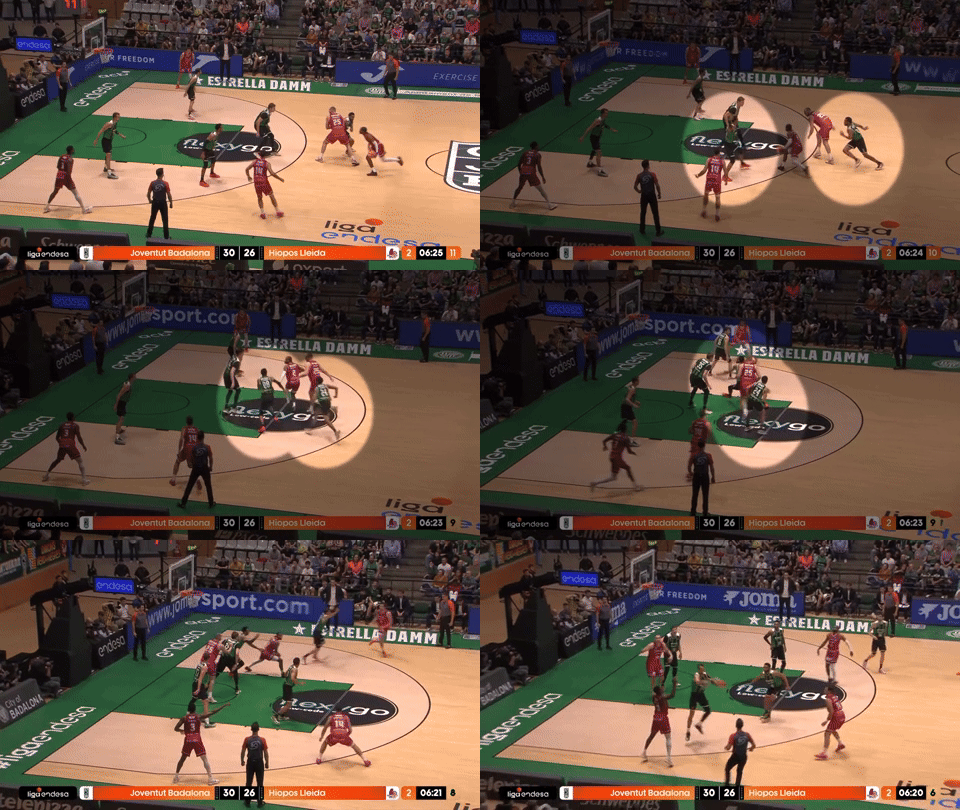 |
Zooming In: Sending the peel switch is most easily accomplished by bringing the top defender from the full side of the floor onto the ball, with the on ball defender peeling off into rotation. In today’s video breakdown, this peel switch is shown as readily accessible from either side of the floor, whether the ballhandler is attacking toward the full side or snaking back into it.
This approach may run counter to the philosophy of some coaches who play drop, where the underlying goal is to defend the ballscreen two on two and avoid sending help. Ideally, that remains the case. But depending on your level and the quality of the guards you are facing, you may already be shrinking the floor within your drop coverage, making this a natural next step rather than a departure from your core principles.
The peel switch also does not need to occur on every possession. The top defender on the full side begins in a gap help position without fully committing to the switch, waiting to see how the on ball defender navigates the screen. If the defender is able to work over and recover into a solid position, the gap defender stays home. If not, they can call the peel and switch onto the ball.
When a ballhandler uses the snake dribble, they are often in an attacking mindset, focused on reading the big and accessing a path to the rim or space for a pull up. In those moments, they are not always scanning the entire floor or prepared to immediately punish help with a kick out.
Getting Back to Neutral
In a sense, the peel switch can still be considered in solving the ballscreen two on two. In environments where an elite scoring guard is the primary threat, the priority becomes eliminating space as quickly as possible and getting a defender neutral on the ball. The peel switch accomplishes that without committing two defenders onto the ball.
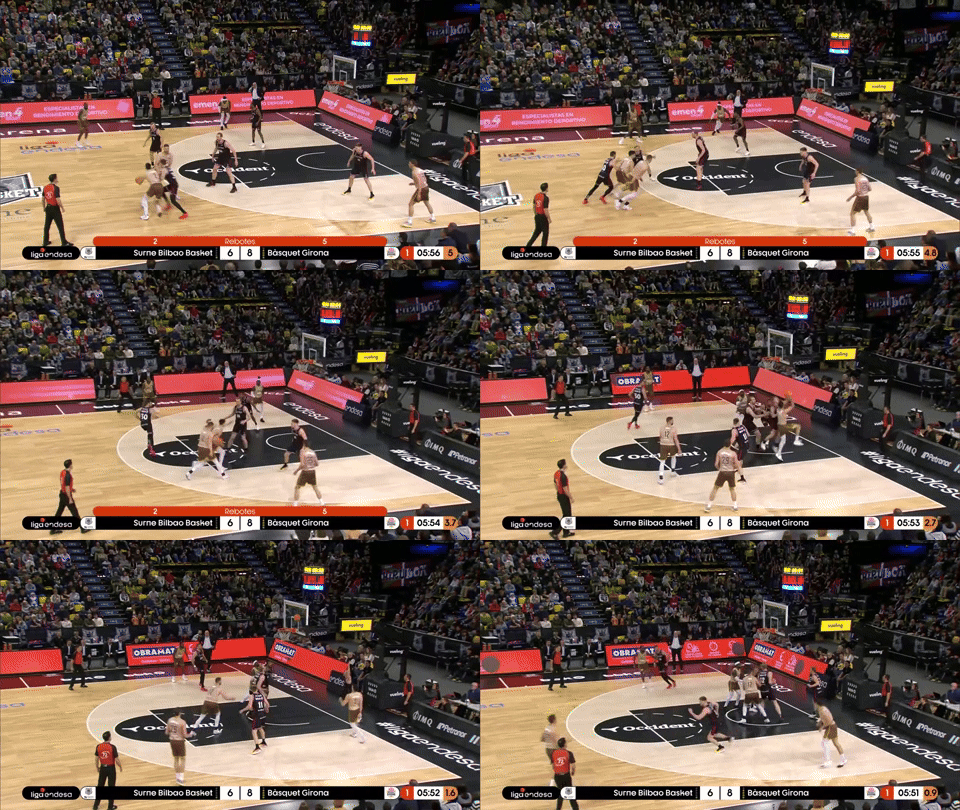 |
Zooming In: As the ballhandler is absorbed by the peel defender, the dropped big is relieved of the responsibility to contain the dribble and can remain attached to the roller. That removes the pocket pass and lob while keeping the coverage intact. Because many offenses pair their most dangerous ballhandler with their most threatening big, using a drop with a peel against the snake dribble effectively takes away the offense’s two primary options and forces the ball out of its comfort zone.
Picking Up Cutters
Much of the success of the coverage stems from the way offenses can become stagnant against drop, with off ball players holding their spacing in anticipation of catch and shoot opportunities.
Zooming In: As the ballhandler snakes back toward the two side, the low man is momentarily responsible for splitting two during the peel switch. Their job is to be prepared to either stunt at the pass out to the 45 or rotate up and kick the defender peeling off to the corner. With the offense content to hold space against the drop, the defense is less stressed to navigate the spray out pass and get themselves back to neutral in the possession.
*This type of peel switch is reminiscent of “Next” PNR coverage {🔒}, something we have also covered on SGTV.
As shown, simply holding space through the scramble can make the defense’s peel and subsequent rotations easier, but that is not always the case. Savvy players on the full side can recognize the defender leaving to peel and immediately cut to the basket, creating the potential to further scramble the coverage. In this scenario, the low man splitting two drops into the paint to absorb the cutter, triggering the defender peeling off to rotate directly to the wing.
Whether the offense holds space or cuts aggressively, sending the peel switch from the full side of the floor allows the defense to simplify the scramble, communicate early, and get back to neutral.
The peel switch gives drop coverage a built in answer to the snake dribble, allowing the defense to neutralize space without overhelping. In a game defined by constant adjustments, these small tactical responses are often what keep a coverage viable over time. To see more applications of the peel switch and a full breakdown of the concept, SG+ Members can watch the complete video now on SGTV!