
Six coaches. A few ideas worth revisiting before Saturday.
In less than a week, six coaches will take the floor at the Slappin’ Glass SoCal Summit.
Several have joined us on the podcast or in the Film Room, and some of what they’ll present Saturday builds directly on conversations we’ve been thinking about for a while.
So, before the Summit, we went back through some of that work.
Here are a few ideas worth revisiting and what we’ll be listening for next.
SG SoCal Summit Schedule – Saturday, August 15, 2026
Mike Magpayo | Fordham University
Smart Wins: Analytics, Language, and Principles of Play
Kyle Bossier | Cal Poly SLO
Playing the Beautiful Game: Pace, Space, and Positionless
Alex Pribble | University of Idaho
Program Building: Five Decisions That Drive Improvement
Matt Majkrzak | Northern Illinois University
Scripted Subbing: Aligning Rotations with Offensive Play Calling
Tim Fanning | BYU
Defense First, Identity Fast: Lessons from a Gold Medal Summer
Martin Schiller | University of Utah
Building PNR Defense: Advanced Shell Drills
Mike Magpayo: From Data to Decisions
Smart Wins: Analytics, Language, and Principles of Play
Mike Magpayo has long been known for the level of detail behind how his teams prepare and play.
The 2023 Big West Coach of the Year and 2026 NABC Guardian of the Game Award winner has also developed a reputation for his use of analytics. What interests us is how he gets that information onto the court.
There is no shortage of data available to coaches. The harder part is deciding what actually deserves to influence the way a team teaches, talks, practices, and plays.
Saturday, Magpayo will dig into that connection between analytics, language, and principles of play.
What We’re Listening For
Which numbers does Magpayo believe are worth coaching?
And once he identifies something useful, how does he turn it into language players can actually use?
Kyle Bossier: Creating Space Through Movement
Playing the Beautiful Game: Pace, Space, and Positionless
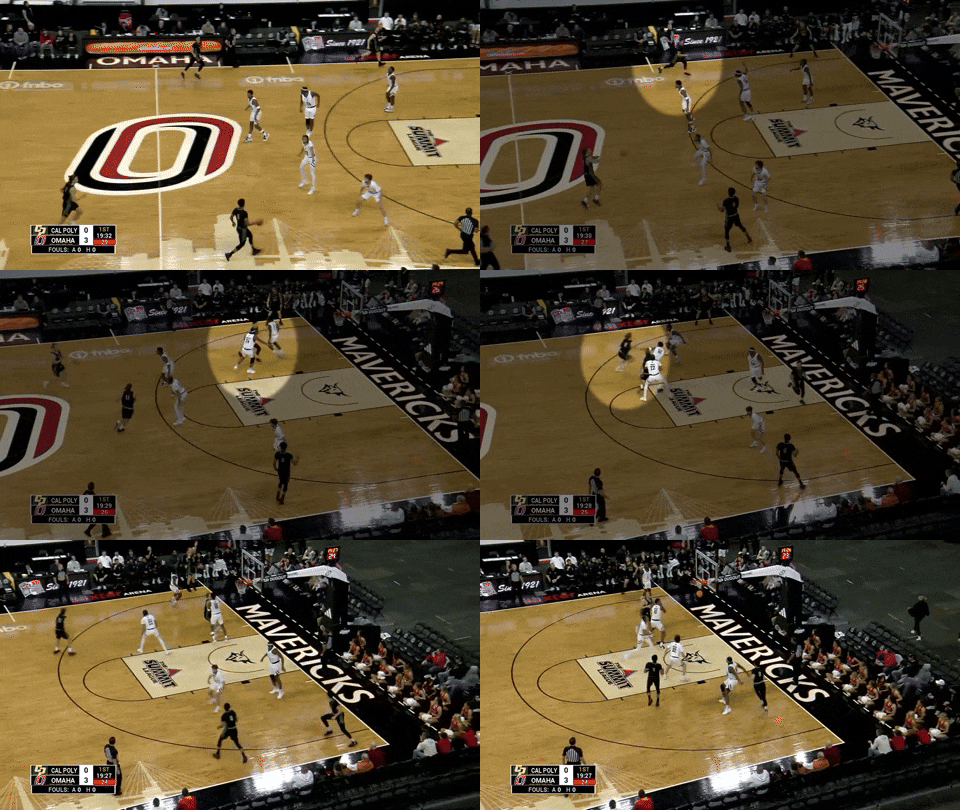
A few weeks before last year’s Summit, Coach Bossier joined us in the Film Room to break down Cal Poly’s “4 Out, 1 on the Move” offense.
Instead of permanently assigning one player to the dunker spot, Cal Poly keeps the fifth player moving through the interior. Squeeze cuts, Corner Loops, Empty-Outs, and other movements clear players off the perimeter, shift the defense, and return the offense to its preferred spacing.
 |
Create the Gap Before the Drive
One detail we liked was how much work happens before the ballhandler attacks.
On the Squeeze, the player at the 45 cuts early, creating the double gap while also occupying the low defender. Now the ballhandler is attacking space that the offense helped manufacture.
Stay With the Advantage
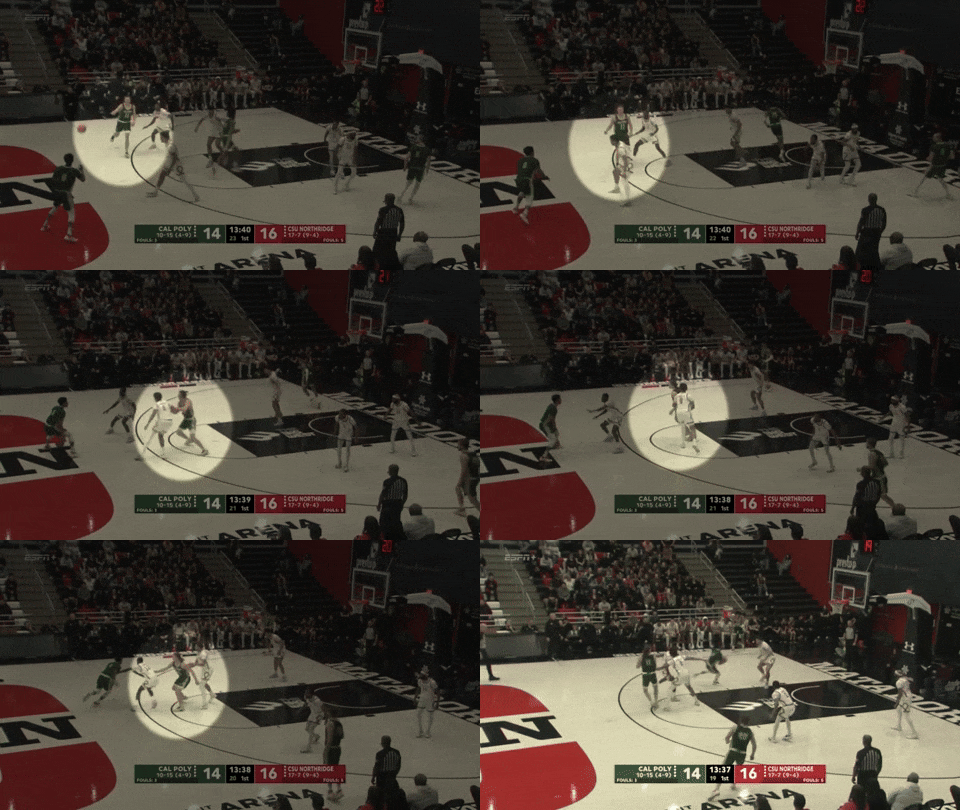
Cal Poly also has an answer when a ballscreen gets switched or steered.
Rather than immediately moving on, the screener can slip out and return with a “Check” screen, giving the offense another opportunity to get the screening angle it wanted in the first place.
 |
Finish the Cut
Bossier also spent time on what happens after a player gets to the rim.
Stay inside too long and the next drive loses its space. The cutter has to read whether there is an opportunity to hang briefly around the dunker or whether it is time to exit and reopen the floor.
Those details are part of what makes Saturday’s topic interesting. “Pace, Space, and Positionless” isn’t only about playing faster or standing farther apart. A lot of it happens through the timing and movement of the four players without the ball.
What We’re Listening For
How does Bossier keep five players connected without over-scripting the offense?
And how much of Cal Poly’s spacing is created before the ballhandler ever attacks?
🔒 Watch the Cal Poly Film Room with Coach Bossier → [LINK]
Alex Pribble: Building Belief Through Clarity
Program Building: 5 Decisions that Impact Improvement
When Coach Pribble joined the podcast, much of our conversation centered on simplifying the work that goes into building a program.
A few ideas stuck with us.
Build Belief
Pribble talked about identifying culture carriers, establishing consistent systems, and staying with the process long enough for expectations inside the program to begin changing.
A rebuilding program eventually has to move from talking about what it wants to become to expecting those standards every day.
Make Roles Clear
One of the more practical ideas was how his staff handles player roles.
Each player’s role, responsibilities, and areas for growth are consolidated into a one-page outline. Players leave with a clear understanding of what the team needs from them and where their development should be focused.
Build Systems That Give Time Back
Pribble’s staff also uses detailed checklists and recurring processes around recruiting, scouting, fundraising, and player development.
The benefit is straightforward: less time recreating operational work and more time available for film, teaching, and relationships.
What We’re Listening For
Pribble will narrow program building down to five decisions Saturday.
We’re interested in which five made the cut and which parts of running a program he believes coaches spend too much time worrying about.
Listen to our conversation with Coach Pribble → [LINK]
Matt Majkrzak: Freedom Through Structure
Scripted Subbing: Balancing Rotations and Offensive Playcalling
One of our most popular podcast conversations from the past year centered on Coach Majkrzak’s approach to scripting games.
He scripts six offensive calls for each four-minute segment and connects those calls to planned lineups and substitution patterns.
The goal is to give the staff and players clarity before the game starts without locking them into the plan once it does.
Match the Calls to the Lineup
Majkrzak builds the offensive script around the personnel expected to be on the floor.
Each group enters with actions it has prepared, allowing the staff to match the offense to the strengths of that particular lineup.
Substitutions and play calling become part of the same plan.
Give Players a Runway
Players generally know when they’re likely to enter, how long their stint may last, and which actions they’ve prepared for that window.
That clarity can reduce some of the pressure to immediately manufacture something when checking into the game and give players a better chance to settle into their minutes.
Get Off the Script
The other side of the system is knowing when the plan no longer fits the game.
If an opponent begins pressing, zoning, switching, or hard hedging, Majkrzak is willing to move away from the planned calls and stay with the advantage the defense is giving up.
What We’re Listening For
How far does Majkrzak take the scripting?
And what tells him it’s time to get off it?
Listen to our conversation with Coach Majkrzak → [LINK]
Tim Fanning: Building Identity Fast
Defense First, Identity Fast: Takeaways from a Gold Medal Summer
Coach Tim Fanning and the U18 Netherlands National Team went 8–0 on their way to a gold medal this past summer at FIBA EuroBasket.
What caught our attention was how quickly that group had to establish what it wanted to be.
International basketball compresses the teaching window. There are only so many coverages, habits, and situations a staff can get to before the games begin.
For Fanning and the Netherlands, the defensive end became a priority.
Saturday, we’ll hear more about what they chose to emphasize during that 8–0 run and how they built an identity without the benefit of a long preseason.
What We’re Listening For
What went in first?
What did Fanning decide the Netherlands had to be good at defensively—and what did they decide they could live without?
Martin Schiller: Building PNR Defense
Building PNR Defense Through Advanced Shell Drills
When Coach Schiller joined us in the Film Room, we looked at ballscreens mostly from the offensive side.
What stood out was how specifically he thought about the coverage he expected to see.
Against a hedge, the screener released quickly to create separation and open the 4-on-3. Against a short show, the screener stayed connected longer so the ballhandler could turn the corner.
One idea from later in the Film Room is especially relevant to what he’ll present Saturday.
Schiller discussed using specific calls early in the season to deliberately teach counters players weren’t ready to recognize on their own.
As players saw those situations repeatedly, the calls could eventually become automatics.
Saturday he’ll attack the ballscreen from the other side, showing how he builds PNR defense through advanced shell drills.
What We’re Listening For
How does Schiller progress his shell work once players understand the base coverage?
What changes when the offense begins altering spacing, screening angles, and actions?
🔒 Watch Coach Schiller’s Film Room → [LINK]