
What are coaches actually trying to solve right now?
Each quarter, we look past the newest SGTV releases and focus on what coaches keep coming back to, the concepts being rewatched, shared, and revisited long after they first go live.
Those repeat views give us a signal. They show where coaches are still searching for answers, where coverages are evolving, and which ideas continue to create new questions.
This quarter, four themes stood out: Hedge & Plug, Late-Game Defense, Randomized Offense, and ICE Solutions.
What We’re Seeing
- The second advantage is becoming as important as the first. Much of the Hedge & Plug material coaches revisited wasn’t about simply beating the coverage. It was about what comes next, the rescreen, X-out, micro closeout, short roll, or altered spacing after the defense has initially done its job.
- Late-game defense is increasingly about solving what happens after the switch. The switch itself is only the beginning. Coaches kept returning to the connected solutions behind it: triple switches, protecting the post mismatch, and trapping unfavorable matchups.
- Random offense does not mean unstructured offense. The Horns Flare material from our breakdown of Hood College points toward a larger idea we continue to see: familiar actions becoming harder to scout when they can arrive from different entries, timings, and locations.
- The best coverage counters often change the problem instead of attacking it directly. Against ICE, something as simple as aborting the screen and sprinting the screener to the rim can force the defense out of the coverage it was prepared to execute.
*Note: Each video’s accompanying newsletter links to the “SG Coaches Corner”. If you have not already joined the Coaches Corner, please check your initial welcome email for the invitation. Can’t find it? Feel free to reach out to us, and we will promptly resend the invite.
Hedge & Plug
The Signal: Winning after the coverage has done its job
Hedge & Plug has become a recurring thread in our film study, but the most interesting development this quarter was what happened after the initial coverage contained the ball.
The videos coaches kept returning to focused on the next layer: jumping on the pickup, rescreening the coverage big, attacking the X-out, and playing against the micro closeouts created behind the action.
The larger question: Once the defense has contained the first advantage, how does the offense create the next one?
WATCH: Jump on the Pickup & Hand Technique
Defensive Lens: taking away the most dangerous next pass and keeping the coverage from creating unnecessary rotations. This is something we also spoke about on the podcast with G-League Coach of the Year, Vitor Galvani {🎙️}.
🔒 SG ✚ DEEP DIVE: Our initial breakdown on the coverage and rotations behind the ballscreen.
READ: Newsletter
WATCH: Button Hook Rescreen – Attacking the “Hedge & Plug”
Offensive Lens: forcing the coverage big to solve a second action before fully recovering from the first.
🔒 SG ✚ DEEP DIVE: Another look at how offenses are countering the “Hedge & Plug” ballscreen coverage by attacking the guard’s release to plug the short roll, coupled with a well-timed Gortat screen.
READ: Newsletter
WATCH: Attacking the Micro Closeout
Development Lens: training the smaller advantages that appear once the initial coverage has been broken.
READ: Newsletter
Getting a Late-Game Stop
The Signal: Switching is only as good as what happens next
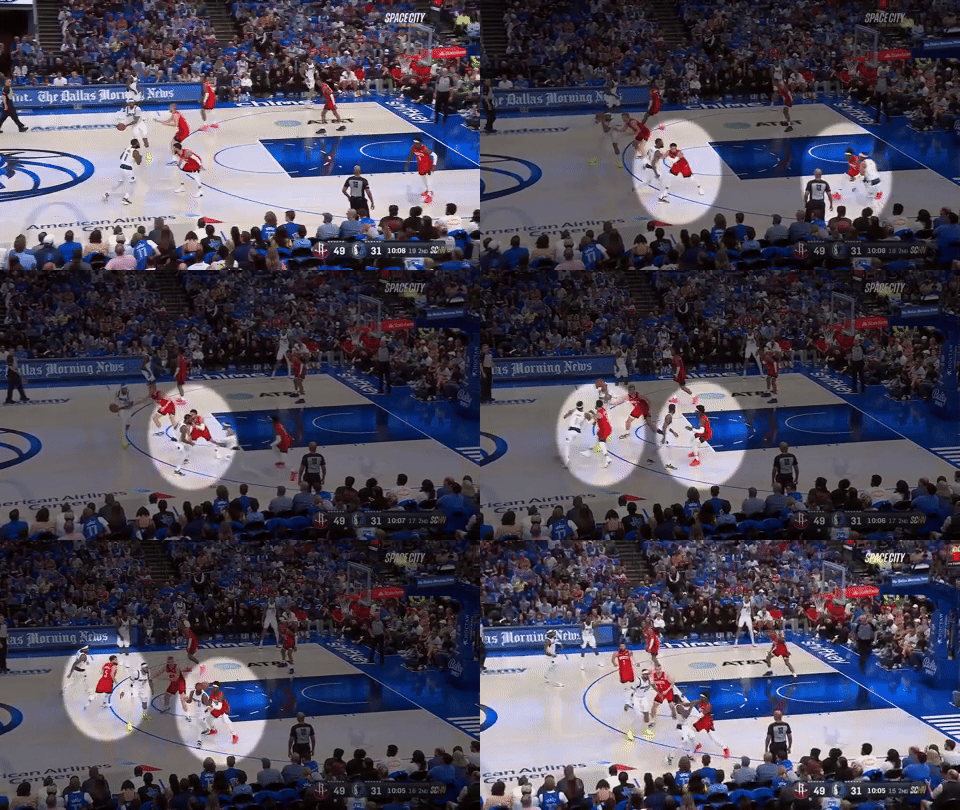
Late-game switching removes some immediate problems, but it often creates another one: a post mismatch, unfavorable perimeter matchup, or difficult off-ball exchange.
The material coaches revisited most centered on the solutions behind the switch, connected switching, triple switches, trapping mismatches, and fronting the post.
The larger question: Can you switch the action without simply moving the advantage somewhere else?
WATCH: Switching Tough Actions – The Details Behind Connected Switching
“In this Film Room video Coach Charles Klask discusses the details behind building a defense that is physical, connected, and hard to script against, covering when to switch, how to communicate it, and the details that make it hold up.”
🔒 SG ✚ DEEP DIVE: A couple of our favorite trapping strategies to solve a perimeter mismatch post-switch with a “Hit” from the loaded side or a “Hit” on the roll.
🔒 ✚ SG DEEP DIVE: Protecting a post mismatch with a full front and aggressive high post deny.
READ: Newsletter
 |
Getting Random
The Signal: Familiar actions, less predictable arrival points
Randomized offense does not necessarily require more actions. Sometimes it means allowing the same action to emerge from different locations, timings, and preceding triggers.
The Horns Flare material is a prime example. The action can appear first side, second side, or late clock while connecting with ghosts, ball screens, flares, and immediate rescreens.
The larger question: How do you make something your players know extremely well harder for even the best defenses to anticipate or scout?
WATCH: Offset Horns Flare – Randomizing Flares
“This breakdown of Hood College looks at the versatility of Horns Flare as more than a set action. Used on the first side, second side, or as a late clock retrigger, the concept connects ballscreens, ghosts, and flares to organize three players into action and force the defense to solve multiple coverages in sequence.”
🔒 SG ✚ DEEP DIVE: The use of “Patient Pivots” and off ball cutting on high paint penetration to create randomized “Cross Court” DHO opportunities.
READ: Newsletter
Breaking the ICE
The Signal: Sometimes the best counter is to remove the screen
Rather than repeatedly trying to beat ICE with the ballhandler, some of the most interesting solutions change the geometry before the coverage can settle.
A rim sprint by the screener, a wide reject, or screening away forces the defense to solve a different problem than the one it prepared for.
The larger question: Can you punish the coverage without actually playing into the coverage every time?
WATCH: ICE Coverage Solutions – Rim Sprints
“A simple counter to ICE built around the screener aborting the action and sprinting to the rim. The resulting rim pressure puts the coverage big in a bind, creating opportunities for lobs, drives, and spray-outs.”
🔒 SG ✚ DEEP DIVE: Coach Moncho Fernández’s wide reject attack and screen away against outer third ICE coverages.
READ: Newsletter
What We’ll Be Watching Next
The interesting part of these reports is seeing where one problem leads to the next.
Hedge & Plug is increasingly becoming a conversation about second advantages and recovery closeouts. Switching is becoming a conversation about mismatch management. Random offense is pushing toward how teams create unpredictability without sacrificing clarity.
Those are a few of the threads we’ll continue following as the season kicks off here in the Fall.
If there’s a problem you’re working through that you think belongs on our radar, reply and let us know.